
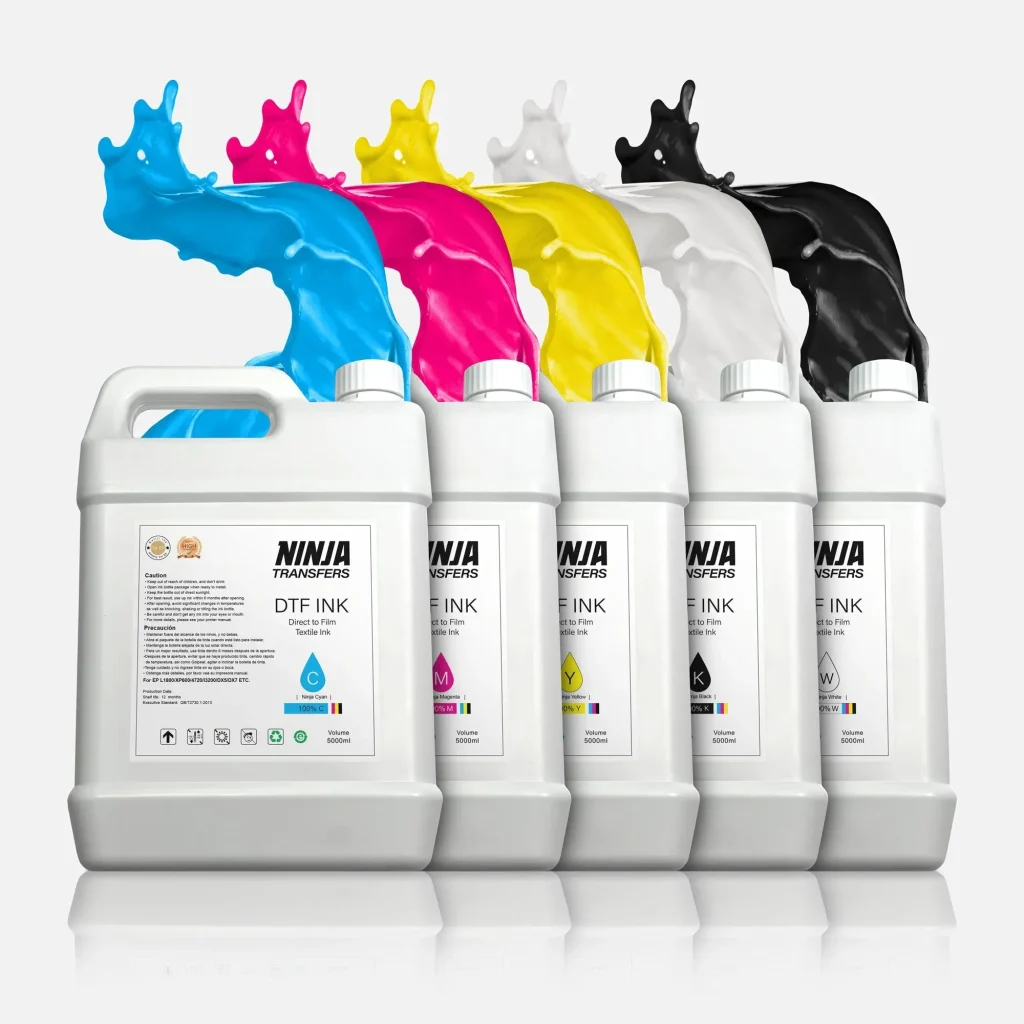
DTF inks unlock vibrant color and lasting durability in textile decoration, making Direct-to-Film printing a popular choice for designers. By combining rich color payoff with a flexible hand feel, these inks deliver excellent DTF color accuracy across a range of fabrics. Understanding the chemistry, film, and heat-activated bonding helps explain why DTF inks durability is a headline feature for ready-to-wear and performance gear. The process hinges on precise DTF heat press temperature and timing to maximize adhesion without sacrificing softness. From vibrant prints on dark fabrics to bold multicolor designs, Direct-to-Film printing remains a versatile solution for brands seeking reliable performance, including insights on DTF vs DTG inks.
Viewed through an alternative lens, this approach is a film-based transfer system that uses a carrier film, adhesive powder, and heat to bind the design to textile. In practice, practitioners discuss color fidelity, wash fastness, and a soft hand as key measures when comparing this method with other digital printing options. You’ll also see terms like transfer-film printing, pigment-based film technology, and post-transfer curing used to describe the same process in different contexts. Ultimately, the choice comes down to production needs, fabric types, and achieving a balance between vibrant color, durability, and a comfortable hand.
Direct-to-Film Printing Essentials: How DTF Inks Create Vivid Color and a Soft Hand
Direct-to-Film printing relies on a transfer film that captures a digital image and later transfers it to fabric through heat. The DTF inks are formulated to bond with the film and co-exist with adhesive powders that facilitate the transfer during activation. This sequence—from ink on film to adhesive-assisted bonding on textiles—defines the core of the process, turning a digital file into a wearable graphic. The science hinges on three interconnected zones: the printed image on the film, the adhesive and carrier layers, and the final printed surface on the garment. Each zone influences how color, durability, and hand feel translate from screen to fabric, making precise control of chemistry and process parameters essential for repeatable results.
Color formation in Direct-to-Film printing isn’t just about pigment density; it’s about how the ink chemistry meets the film, the powder, and the fabric during heat activation. This interplay determines saturation, gloss, and the perceived color depth after transfer. In practice, printers often use a CMYK palette with white as a separate layer, enabling vibrant images on darker textiles. The white underbase plays a pivotal role in true color perception, especially when printing on black or colored fabrics where underlying tones can mute vibrancy. The outcome depends on pigment dispersion, particle size, and the stability of the ink formulation across temperature shifts and storage, ensuring consistent color from batch to batch.
DTF Color Accuracy: Calibrating Ink, Film, and Workflow for True Hues
Achieving DTF color accuracy requires careful color management across the entire workflow. Calibration of the printer, the DTF inks, and the transfer film, combined with a robust workflow, ensures that the visible color on the film translates faithfully to the finished garment. This typically involves color targets, ICC profiles, and standardized color checks at key stages to minimize drift. By aligning the digital file’s intent with the physical transfer, brands can preserve hue, saturation, and tonal balance—even on a range of fabrics and colors.
Gamut control and ink rheology are critical to consistent color. Smaller pigment particles can yield smoother gradations and tighter color matching, but they demand stable suspension and precise flow properties to avoid nozzle clogs and streaks. The formulation must stay stable across thermal cycles and storage conditions so that color fidelity remains high from one batch to the next. White underbase design, pigment distribution, and film calibration all interact to deliver a predictable color outcome on diverse textile substrates.
DTF Inks Durability: Ensuring Wash-Ready Garments with Long-Lasting Graphics
DTF inks durability is a key selling point for apparel, bags, and other textiles that endure frequent washing and abrasion. The durability of the printed image hinges on the chemical bonding formed during heat transfer, the resilience of the adhesive layer, and how well the ink remains intact under heat and moisture exposure. When heat is properly applied, the design bonds to the fabric in a way that resists cracking and fading, maintaining color and detail through many wear cycles.
Adhesion quality improves when the transfer film, adhesive powder, and fabric meet at the right temperature and pressure. If the heat is insufficient, bonding weakens; if it’s excessive, the ink can degrade or the hand feel can become stiffer. Durability is typically verified through standard wash tests, rub/abrasion tests, and exposure to UV light and humidity. These assessments quantify color retention, surface integrity, and the tendency for gloss variation, guiding process tweaks to sustain a durable print across fabrics and uses.
DTF vs DTG Inks: A Technical Comparison for Fabric, Production, and Cost
DTF vs DTG inks represent two distinct approaches to garment decoration. DTG applies ink directly to fabric, often requiring pretreatment and a white base for light-on-dark designs, whereas DTF uses a transfer film and powder-based bonding to activate the ink on the fabric. This film-and-adhesive workflow can offer advantages in color vibrancy, multi-color fidelity on dark fabrics, and higher production efficiency for bulk runs. The science behind both methods centers on ink chemistry, film interaction, and heat activation—elements that determine durability, color range, and surface feel.
From a production perspective, DTF often provides advantages in color consistency across batches and potential cost savings related to pretreatment and fabric compatibility. DTG’s performance, by contrast, can be highly fabric-dependent, with results strongly influenced by pretreatment quality and material choice. Choosing between DTF inks and DTG inks typically hinges on production volume, fabric types, desired hand feel, and budget. Understanding the underlying chemistry and process dynamics helps printers select the method that best fits their workflow and market needs.
DTF Heat Press Temperature: Optimizing Time, Temperature, and Pressure
DTF heat press temperature is a critical parameter that influences both bond strength and color retention. The goal is to activate the adhesive and set the ink without causing excessive cracking, gloss variation, or hand stiffness. Operators must balance temperature with time and pressure, ensuring even contact across the transfer area. While exact settings vary by fabric type, ink system, and equipment, the principle remains: moderate heat, controlled time, and uniform pressure yield the most reliable results and minimize post-transfer defects.
Post-press handling, such as cooling and peeling strategy (cold peel versus warm peel), can further impact final color appearance and durability. Temperature and dwell time interact with the chemistry of the film and adhesive to determine bond quality and color stability after washing. Following manufacturer guidelines and establishing internal SOPs for different fabric families helps maintain consistency across runs, reducing color drift and surface imperfections while preserving the desired hand feel.
From Film to Fabric: The Complete DTF Printing Workflow for Consistent Results
The complete DTF workflow starts with artwork preparation and color separation, including a white underbase for dark fabrics when needed. The design is printed onto a specialized transfer film using DTF inks, where color fidelity and density are optimized for the subsequent transfer. After printing, an adhesive powder is applied and the film is cured to prepare it for heat activation. The transfer is then placed onto the fabric and pressed with a controlled heat source, with curing and post-processing steps ensuring the image sets correctly.
Quality control remains essential throughout the process. Color matching across batches, test swatches on representative fabrics, and standardized wash tests help ensure consistency. Documenting press conditions, film brands, and adhesive powders supports troubleshooting and reproducibility. Environmental considerations—such as low-VOC ink formulations and proper powder handling—are important for safe production. By adhering to a well-defined workflow, printers can achieve vivid, durable results that feel natural on the garment while maintaining efficient, scalable operations.
Frequently Asked Questions
What are DTF inks in Direct-to-Film printing and how do they work?
DTF inks are pigment- or dye-based formulations printed onto a special transfer film as part of Direct-to-Film printing. After printing, an adhesive powder is applied and the film is heat-pressed onto fabric, transferring the design. The process relies on three key layers—the printed image on the film, the adhesive/carrier layers, and the final inked surface on the fabric—where heat activation bonds the design and establishes color and durability.
How does Direct-to-Film printing achieve DTF color accuracy across fabrics?
DTF color accuracy is achieved through careful workflow calibration: a CMYK color set (often with a white underbase for dark fabrics), printer and film calibration, and stable pigment suspensions. Small pigment particle sizes and proper rheology enable smoother gradients and precise color matching, while ICC profiles and batch-to-batch checks help maintain consistent color on different fabrics.
What factors influence DTF inks durability in Direct-to-Film printing?
DTF inks durability depends on the bond strength between the transferred image and the fabric, the integrity of the adhesive layer, and the curing process. Proper heat and pressure ensure robust adhesion, while under- or over-heating can cause cracking or gloss variation. Durability is verified through wash tests, abrasion checks, and exposure to light and moisture to assess color retention and surface integrity.
DTF inks vs DTG inks: which approach is better for color, durability, and production?
DTF inks vs DTG inks each have strengths. DTF, using a transfer film and powder bonding, often offers vibrant colors on dark fabrics and can be more cost-efficient for multi-color designs with strong wash durability. DTG applies ink directly to fabric and may require pretreatment, with durability influenced by fabric type and pretreatment quality. The choice depends on production needs, fabric type, and budget, with both relying on ink chemistry, film adhesion, and heat-activation behavior.
What DTF heat press temperature and settings are recommended for reliable transfers?
DTF heat press parameters should be tuned to the specific ink and fabric. Typical guidance points to around 160–170°C (320–338°F) for 10–20 seconds, with even pressure and proper post-press handling. Always follow manufacturer recommendations, and consider cold- or warm-peel strategies and post-press cooling, as these can affect color appearance and long-term durability.
How does the hand feel of garments printed with DTF inks compare to other methods, and what ink formulation drives this tactile result?
DTF inks can deliver a softer hand when the transferred layer is lighter and the ink system is optimized for lower resin content. Thicker, resin-heavy formulations may feel stiffer. The hand feel is driven by ink polymer content, transfer thickness, and curing; balancing color depth with a comfortable hand requires careful formulation and controlled curing to keep prints smooth to the touch.
| Aspect | Key Points | Impact / Why It Matters |
|---|---|---|
| What DTF inks are and how they work |
|
Foundation for color transfer, durability, and the final feel of the print. |
| Color science and accuracy |
|
Reliable, repeatable color across fabrics and batches. |
| Durability: longevity of DTF inks |
|
Durable designs that withstand repeated washing when processed correctly. |
| Wear, wash, and color stability |
|
Expect consistent appearance with proper care and material pairing. |
| Feel and hand (tactile quality) |
|
User comfort is balanced with color depth and durability. |
| Direct-to-Film workflow |
|
Workflow choices drive color accuracy and long-term durability. |
| DTF inks vs DTG inks |
|
Different workflows suit different applications while sharing core ink chemistry principles. |
| Heat pressing: temperature, time, and pressure |
|
Critical for bond formation and color fidelity during transfers. |
| Quality control and testing |
|
Ensures consistent results and traceability across runs. |
| Environmental considerations and safety |
|
Safety and sustainability are integral to production quality. |
| What the future holds for DTF inks |
|
Continual advancement will enhance both aesthetics and performance. |
Summary
Conclusion: DTF inks represent a convergence of chemistry, materials science, and textile technology. The key to successful Direct-to-Film decoration lies in balancing color fidelity, strong adhesion, and a comfortable hand, all while ensuring durability through washes and wear. By understanding the science of color formation, film bonding, and heat activation, designers and printers can optimize workflows to achieve vivid, long-lasting, and soft-to-the-touch garments. As ink chemistries and transfer films continue to advance, DTF inks are poised to deliver even brighter visuals with reliable wear, making them a compelling option for contemporary textile decoration.