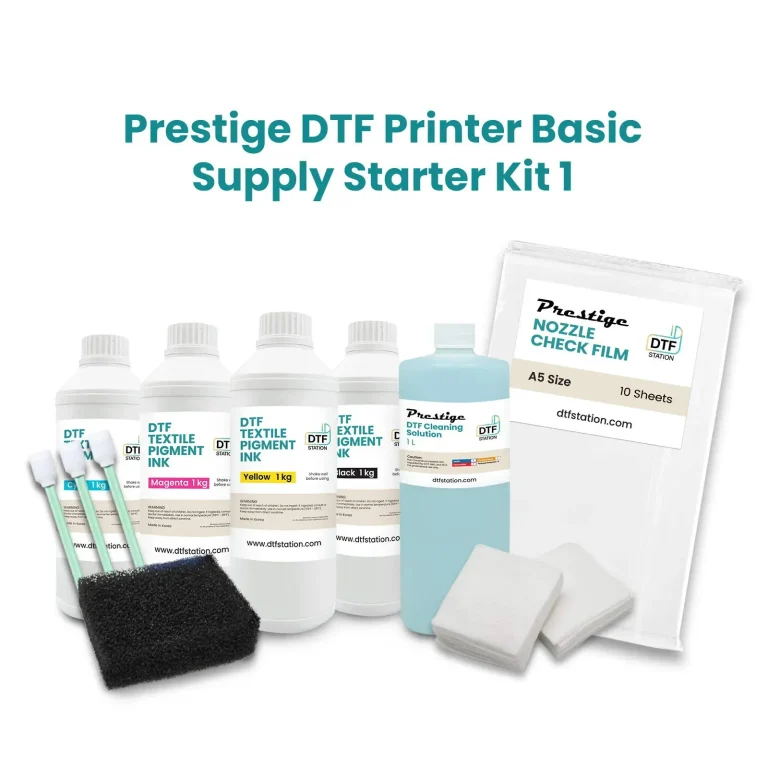

DTF supplies: Inks, Films, Powders to Start Printing
DTF supplies are the backbone of successful Direct-to-Film projects, providing a reliable foundation for beginners and seasoned crafters as they learn the workflow, troubleshoot common issues, select compatible components, and scale their production from small runs to more ambitious designs, all while establishing clear quality-control checkpoints. Choosing the right DTF inks and DTF films is essential, as these two components determine color vibrancy, transfer clarity, edge sharpness, and overall durability across a wide range of fabrics, from lightweight cotton blends to dense polyester blends, with consistent results across different lighting conditions. Equally important are DTF powders, which bond the ink to the fabric during the heat-curing phase, help resist washing impacts, support a clean release from the film, and contribute to smooth gradients, crisp text, and long-lasting flexibility, even after multiple wash cycles. A thoughtful approach to selecting components—focusing on compatibility among inks, films, and powders, tracking production tolerances, and evaluating batch-to-batch consistency—reduces waste, minimizes misprints, decreases setup time, and shortens the path from initial concept to finished garment in hands. By starting with quality components and a proven workflow, newcomers can gain confidence, protect their investment, and deliver professional transfers that customers will love, while experienced makers can optimize throughput, experiment with textures, and build a portfolio of durable, market-ready designs that stand out.
In broader terms, the essential transfer system relies on film-backed inks, resin-coated powders, and compatible media that together deliver crisp graphics on a variety of textiles. Think of this as an ink-on-film workflow where white ink baselines, color layers, and heat-activated binders combine to create durable, soft-handed finishes that perform under washing and wear, while maintaining color fidelity across fabrics. When evaluating options, seek cohesive bundles or tested compatibility charts rather than piecemeal gear to maintain color fidelity and reliable powder bonding across different garment types and production scales. For newcomers and pros alike, a well-chosen starter setup or kit can streamline production, minimize trial-and-error, and help you scale a portfolio of eye-catching, long-lasting transfers.
Choosing DTF Inks for Colorful, Reliable Results
DTF inks are the heart of any DTF setup. To achieve vibrant colors and dependable white ink performance, choose inks that are specifically formulated for CMYK plus white and that offer a wide color gamut, smooth gradients, and stable chemistry. Look for inks designed for direct-to-film printing and that resist clogging or misprints, so your runs stay consistent across batches.
Practical selection criteria include color range, white opacity, and curing behavior. Ensure the inks are compatible with your printer model and print head configuration, and follow manufacturer guidelines for maintenance to prevent color shifts and print head wear. Regular nozzle checks and cleanings are essential to maximize the life and performance of your DTF inks, reinforcing a reliable workflow among your DTF printing supplies.
DTF Films: Thickness, Texture, and Transfer Fidelity
DTF films serve as the canvas for your design, so its thickness and surface texture directly influence color fidelity and powder adhesion. Thicker films can hold more resin powder and transfer evenly on textured fabrics, while thinner films may speed up production for simpler designs. The film’s surface coating and release properties also affect how cleanly the image transfers after heat pressing.
When evaluating DTF films, consider how the coating interacts with inks and powders. A uniform coating helps inks lay down crisply and reduces ink spreading, while release characteristics determine how easily the film separates from the transfer. Selecting films that are proven to work well with your powders will reduce waste and improve transfer crispness across different fabric types.
DTF Powders: Bond, Texture, and Durable Finishes
DTF powders, typically resin-based, seal the ink and enable the transfer to fabric. Powder quality influences edge sharpness, texture, and wash durability. Key considerations include particle size uniformity for even coverage, melt behavior that forms a strong bond under heat, and color compatibility with white ink layers.
Proper powder application and curing are essential for a durable finish. Even distribution, removal of excess powder, and a controlled curing step help prevent speckles and ensure consistent adhesion. Keep powders stored in a cool, dry place to preserve performance, and choose powders that pair well with your chosen inks and films to achieve reliable, long-lasting transfers.
DTF Starter Kit vs Individual Components: What Should Newcomers Buy?
For newcomers, a DTF starter kit can simplify setup by pairing a reliable ink set with compatible films, powders, and the basic accessories needed to begin printing. A well-rounded kit reduces the risk of mismatched materials and streamlines the learning curve, making it easier to achieve consistent results from day one.
If you already own a printer or want flexibility, buying individual components lets you mix brands or upgrade specific parts as needed. When choosing separately, prioritize compatibility with your printer, consider your budget, and plan for ongoing maintenance. Regardless of path, quality should take precedence to avoid cumulative problems as you scale your operations and rely on your DTF printing supplies.
DTF supplies: Building a Smooth, Repeatable Transfer Workflow
A repeatable DTF workflow starts with thoughtful design and color management, then moves through printing, powdering, curing, and transferring. Using dependable DTF supplies— inks, films, and powders that are designed to work together—helps maintain consistent color, texture, and adhesion across runs.
Beyond the core components, establish routines for printer maintenance, film storage, and powder handling to protect your setup. Document your processes, calibrate color profiles, and align heat-press settings with the film and ink you’ve chosen. A disciplined workflow built on reliable DTF printing supplies leads to fewer surprises and more durable, market-ready transfers.
Troubleshooting DTF Transfers: Common Issues and Practical Fixes
Even with quality DTF supplies, challenges can occur during printing and transfer. Common issues include white ink bleeding on dark fabrics, off-spot powder coverage, and transfers that feel overly sticky or crack after washing.
Approaches to fix these problems include revisiting powder application, adjusting curing times, and ensuring proper heat-press temperature and pressure. Calibrate your printer profiles, verify film compatibility with your powders, and perform routine nozzle checks and cleaning. By pairing careful troubleshooting with reliable DTF inks, films, and powders, you can restore color fidelity, edge crispness, and wash durability.
Frequently Asked Questions
What are the essential DTF supplies I need to start printing with DTF inks, DTF films, and DTF powders?
Core DTF printing supplies include DTF inks designed for CMYK plus white, DTF films to carry the image, and DTF powders that seal the print. For beginners, a DTF starter kit can simplify setup by pairing compatible inks, films, and powders with the basic tools you’ll need. Choosing quality components that match your printer and fabrics helps ensure consistent color, strong adhesion, and durable transfers.
How do I choose the right DTF inks for consistent color in DTF printing supplies?
Look for DTF inks that are formulated for CMYK plus white and are compatible with your printer. Key factors include color range, white ink opacity, rapid cure, and stable chemistry that resists clogging. A good DTF printing supplies set will also provide reliable maintenance practices to keep nozzle health and color accuracy over time.
What should I look for in DTF films to ensure clean transfers within DTF printing supplies?
Evaluate DTF films by thickness, surface coating, and release properties. Thicker films can hold more powder and transfer more evenly on textured fabrics, while uniform coatings reduce ink spread. Ensure the film works well with your chosen powders to maximize transfer quality as part of your DTF printing supplies.
Why are DTF powders important and how should I apply DTF powders in our workflow using DTF printing supplies?
DTF powders are essential for sealing the ink and enabling transfer. Consider particle size uniformity, melt behavior, color compatibility, and shelf life. Apply powder evenly after printing, shake off excess powder, then cure before transfer to achieve sharp edges and durable washes in your DTF printing workflow.
Is a DTF starter kit worth it for beginners using DTF printing supplies?
Yes. A DTF starter kit is worth it for beginners because it bundles compatible inks, films, and powders with the basic tools, reducing setup time and guesswork. It also helps ensure component compatibility and smoother troubleshooting as you learn the DTF printing process. You can upgrade components later if needed.
How can I troubleshoot common issues with DTF inks, DTF films, and DTF powders in DTF printing projects?
Common issues with DTF inks, DTF films, and DTF powders include white ink opacity on dark fabrics, transfer sticking, color dullness, or powder clumping. Troubleshoot by confirming printer compatibility and color profiles, verifying film and powder compatibility, adjusting curing time and heat-press temperature, and ensuring proper powder application and removal of excess powder.
| Aspect | Key Points |
|---|---|
| DTF supplies backbone | DTF inks, films, and powders form the backbone of successful Direct-to-Film printing; this guide focuses on these essential components to deliver consistent results on various fabrics. |
| DTF Inks | Designed for CMYK + white; seek wide color gamut; good white opacity; wet-on-wet compatibility; printer compatibility; maintain with regular nozzle checks and head cleaning. |
| DTF Films | Film thickness affects powder adhesion and transfer; surface coating aids ink laydown; release properties; compatibility with powders; begin with a mid-range film. |
| DTF Powders | Powders should have uniform particle size; melt evenly for strong bonding; color compatibility with inks; storage life; application yields clean edges and durable transfers. |
| Starter kits vs. components | Starter kits simplify setup and ensure compatibility; or buy inks, films, and powders separately for flexibility; prioritize quality over price. |
| Workflow & maintenance | Design → Print → Powder → Cure → Transfer; regular maintenance, calibration, nozzle checks, head cleaning; store films properly; inspect transfers for issues. |
| Troubleshooting | Address white ink on dark fabrics, cracking, color mismatch, and tackiness by adjusting white layer, powder coverage, curing time, heat, and calibration. |
| Projects | Begin with simple two-color designs; progress to gradient and texture finishes; apply to apparel and accessories; build a diverse portfolio. |
Summary
DTF supplies form the foundation of successful Direct-to-Film printing, weaving together inks, films, and powders to produce vibrant, durable transfers across a range of fabrics. This descriptive overview highlights how choosing quality components, matching them to your printer, and maintaining a repeatable workflow leads to consistent results and fewer issues. By investing in reliable DTF inks, films, and powders—and by following best practices for maintenance and optimization—you can build a robust setup that saves time, reduces waste, and satisfies customers with professional, long-lasting transfers.